





Lipedema and Perimenopause: One Diagnosis Can Hide Another
Oct 12, 2026
The True Cost: I Got My Legs Back. I Didn't Know What It Cost Me.
By Marki Lemons Ryhal, MBA, CSP, CRS, CRB, CIPS. Menopause Productivity Coach and Fractional Chief AI Officer.
Originally published in The Menopause OS Weekly on LinkedIn, July 1, 2026. Part of The True Cost series.
Key takeaways
- One diagnosis can hide another. An answer is not the same as all the answers.
- Lipedema and perimenopause can overlap. Researchers are studying how hormones may affect lipedema, and you are the only person tracking your whole timeline.
- Keep a dated timeline and bring it to every specialist.
Home was the one place I never was
For a woman who lived on airplanes, home was the one place I never was.
Then the world shut down. And home is where my body finally got a word in.
I didn't slow down. I doubled down.
Everyone assumed 2020 was a lost year. Mine wasn't. I turned 100 face-to-face events into 125 virtual ones. I wrote and published five more bestsellers from my house. I did it sick, undiagnosed, and grounded, and I out-produced my healthiest travel year.
The question was not, "When are we going back?" The question was, "How do we keep delivering value right now?"

A 2020 virtual training session. I went from 100 face-to-face events to 125 virtual events.
With nowhere to run, I paid attention.
No airports. No wheelchair on order. For the first time in years, I could listen to my own body instead of pushing it through another terminal.
So I changed how I ate: keto-style, low-carb, anti-inflammatory. I bought a vibration plate and used it. My swelling came down. My legs felt lighter than they had in years. I didn't have the science. I just knew it worked.
Later, I found research pointing in a similar direction. Studies of low-carbohydrate, high-fat diets in women with lipedema have reported improvements in leg volume and pain. That is what I did. It is not what you should do. Ask your clinician.
But I was managing a condition I still could not name. I reduced the swelling without knowing the source. That is the quiet cost no one talks about: you can get very good at surviving the symptom while the cause stays invisible.
2021: I got the word
When the world reopened, I returned to the same vascular surgeon. Same bruises on my legs, still there from the year before. He looked at me and said one word I had never heard in my life.
Lipedema.
I confused it with lymphedema. I had no frame for it. I made it to my car, pulled out my phone, and looked it up. To me, the images on that screen were not medical diagrams. They were a mirror. In that parking lot, I recognized my legs in the Stage 2 lipedema description. Staging belongs to a clinician. I'm sharing what I saw, not a diagnosis.
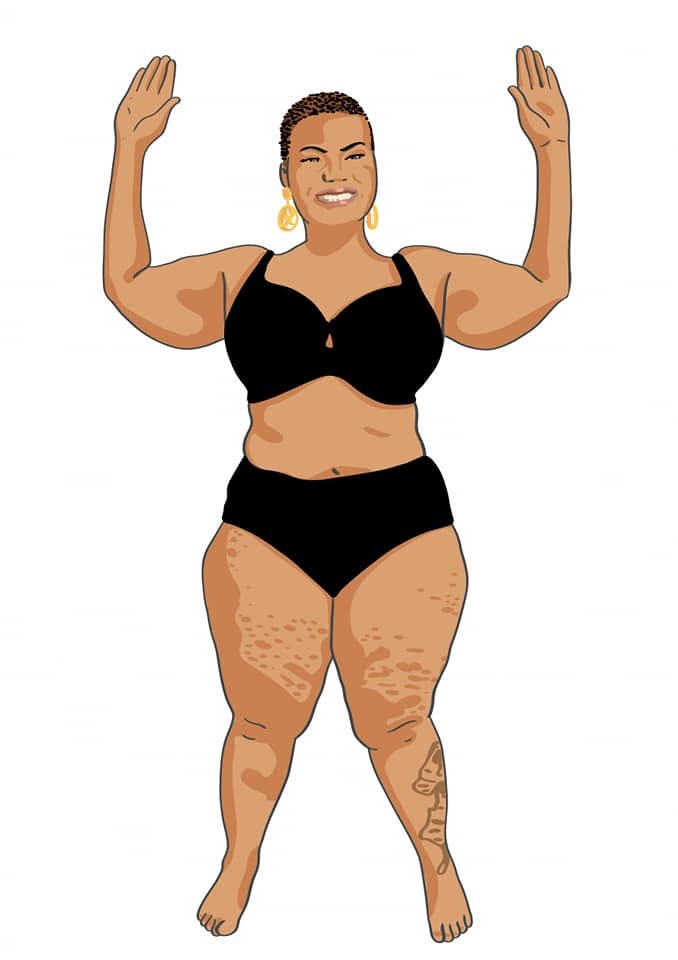
An illustration of Stage 2 lipedema in a woman who is also in perimenopause.
I became the lipedema queen of deep research. Instagram. LinkedIn. Facebook private groups. Google search after Google search. I made a decision fast: I would have large-volume liposuction to remove the lipedema fat and reclaim my mobility.
Surgery is a personal decision to make with a qualified surgeon. I'm sharing mine, not recommending it.
I was on a cliff, close to losing my normal life. I wanted to glide down a staircase again instead of taking it one stair at a time. I wanted to set down the feeling of ten-pound weights I had carried on my legs for years.
Here is what I still did not know
I was in perimenopause. No one told me the two could overlap. No one asked what else had changed that year.
Researchers are studying how hormones may affect lipedema. A systematic review of hormones and lipedema examines that link. The evidence describes an association, and the research is still developing. I had no idea any of it was connected to how fast my symptoms had escalated.
My timeline
|
When |
What happened |
|
2020 |
Grounded. I changed how I ate and started using a vibration plate. Swelling came down. |
|
2021 |
My vascular surgeon names it: lipedema. |
|
November 30, 2021 |
First of three surgeries over 63 days. Also the first day of my last menstrual cycle. |
|
Weeks that followed |
Menopause signs crept in while I focused on my legs. |
|
2022 |
The year everything changed. |
My three surgeries spanned 63 days, starting November 30, 2021. The first day of my first surgery was the first day of my last cycle. Ever.
I'm not claiming one caused the other. I'm telling you the timing because it's the part nobody asked about.
For those 63 days, my body healed from liposuction while another change was already underway. I reclaimed my mobility and lost my ability to reproduce in the same season, and I still could not tell you what was formally wrong with me.
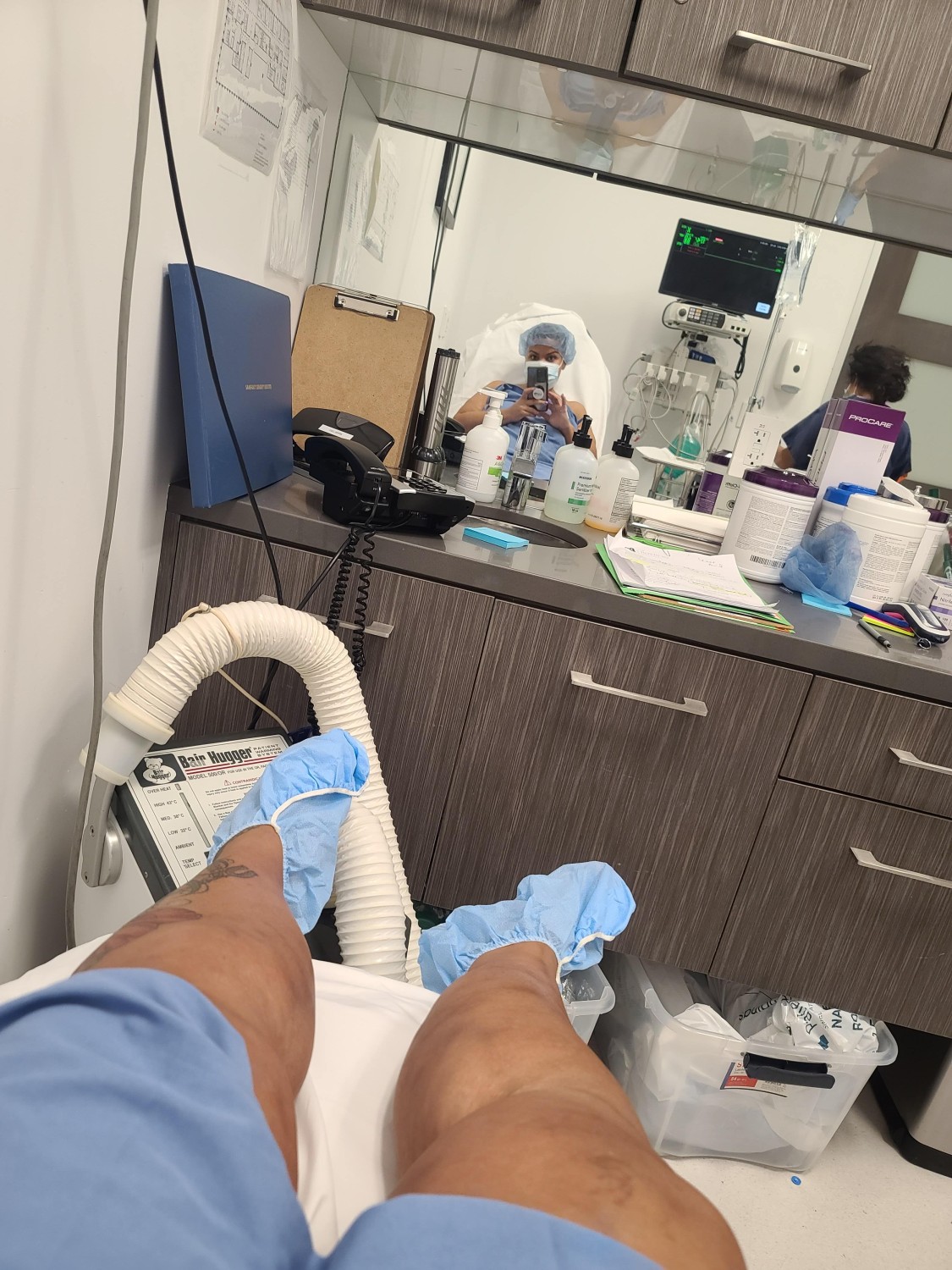
Day one of my first surgery. It was also the first day of my last cycle. I did not know this photo would mark two endings and one beginning.
What can you take from this?
One diagnosis can hide another. Getting an answer is not the same as getting all the answers. I finally had a name for my legs and walked right past the second clock, already ticking.
When you get an answer, keep asking. Bring these five questions to your next appointment:
- What else could explain these symptoms?
- What does this condition connect to?
- What changed in the months before everything shifted?
- Who should look at my whole timeline?
- What should I track before my next appointment?
You are the only person tracking the whole story of your body. No single specialist is looking at it all.
Build your timeline with AI.
Capture the dates once, by voice or by typing, and let AI format them. Use this prompt:
Turn these notes into a one-page health timeline for my next appointment. Dates and facts only. No diagnosis, no advice.
Keep prescription numbers, insurance IDs, and birthdates out of any AI tool. Review the result before you share it. For a second example, see how I turn a log into a report with AI.
What came next
I reclaimed my legs. I just had no idea a second reckoning had already begun.
What pulled me through what came next did not come from a prescription pad. It came from a machine. That is 2022, the year everything changed. (Link to the next True Cost issue when it's live.)
Frequently asked questions
Can lipedema and perimenopause happen together?
Yes. Both can occur in midlife. Researchers are studying how hormones may affect lipedema, and current evidence describes an association rather than a proven cause. If you have both, ask your clinician to review the entire timeline.
What is the difference between lipedema and lymphedema?
In general terms, lipedema is a disorder of fat distribution that usually similarly affects both legs. Lymphedema is swelling from a problem in the lymphatic system and can affect one limb. Only a qualified clinician can tell them apart, so ask for an evaluation.
Can menopause make lipedema worse?
Some women report that symptoms changed during hormonal transitions, and researchers are studying the connection. It is not proven for any one woman. Track what changed and when, and share the timeline with your clinician.
How is lipedema diagnosed?
A qualified clinician, such as a vascular specialist, typically diagnoses it through a medical history and physical exam. They may order tests to rule out other conditions. Self-research can help you prepare, but it is not a diagnosis.
Can diet help lipedema symptoms?
Some women report less swelling with low-carbohydrate or anti-inflammatory eating, and small studies of low-carbohydrate, high-fat diets in women with lipedema have reported improvements in leg volume and pain. Diet does not cure lipedema. Talk with your clinician before you change how you eat.
What should I ask my doctor after a diagnosis?
Ask what else could explain your symptoms, what the condition is connected to, what changed in the months before your symptoms shifted, who should review your full timeline, and what to track before your next visit.
Next step
Build the system behind your timeline: Menopause OS. Read the research: Menopause & Career Intelligence report. Subscribe to The Menopause OS Weekly.
Sources: Low-carbohydrate, high-fat diet in women with lipedema (PMC) · Impact of hormones on lipedema development: a systematic literature review (PMC)
This content is for educational and informational purposes only and is not medical advice. It is not a substitute for diagnosis or treatment by a licensed healthcare provider. Consult a qualified professional about your individual health. This article shares my lived experience. It is not a recommendation for any procedure, diet, or treatment.


